🚀Free shipping on orders over $100 !
🎁Special Offer: 20% Off All Products!No Code Needed!
Original price was: 154.64$.124.16$Current price is: 124.16$.
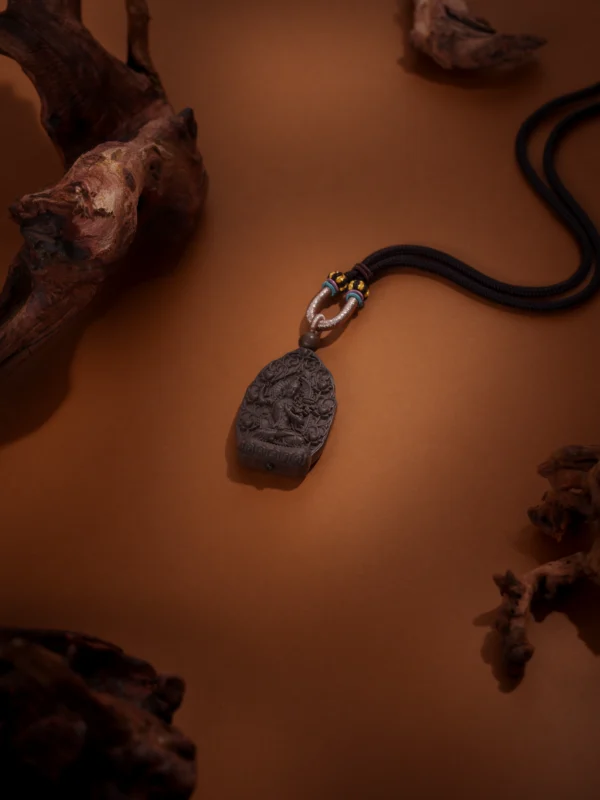
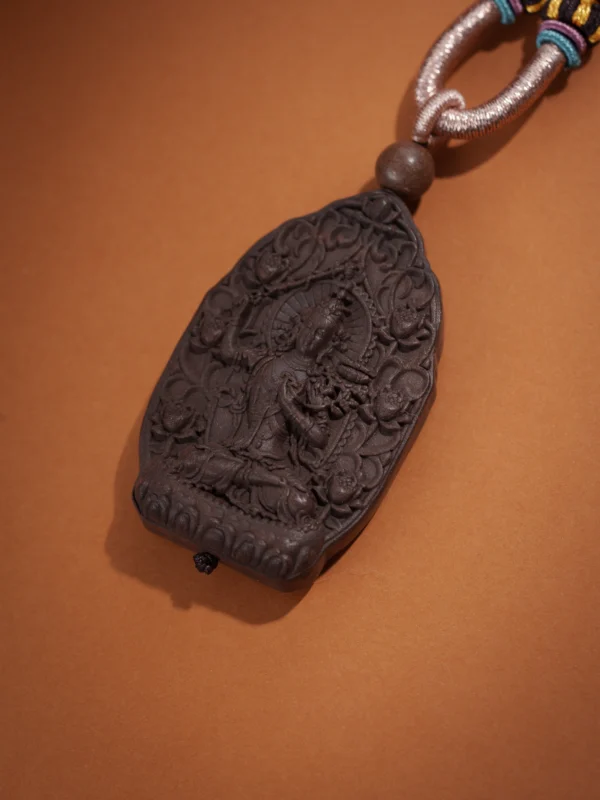
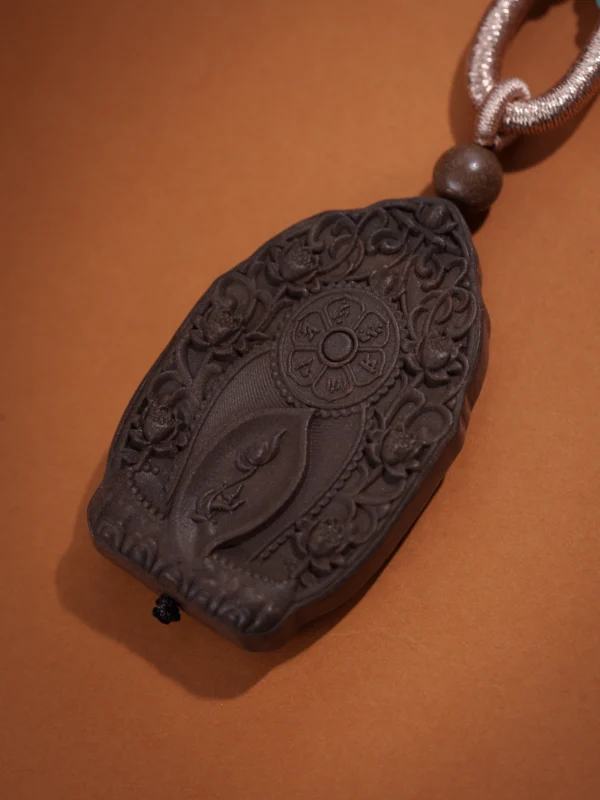
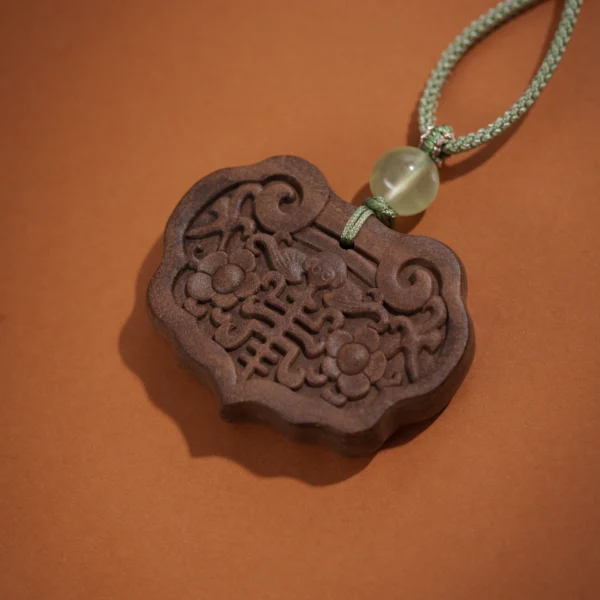
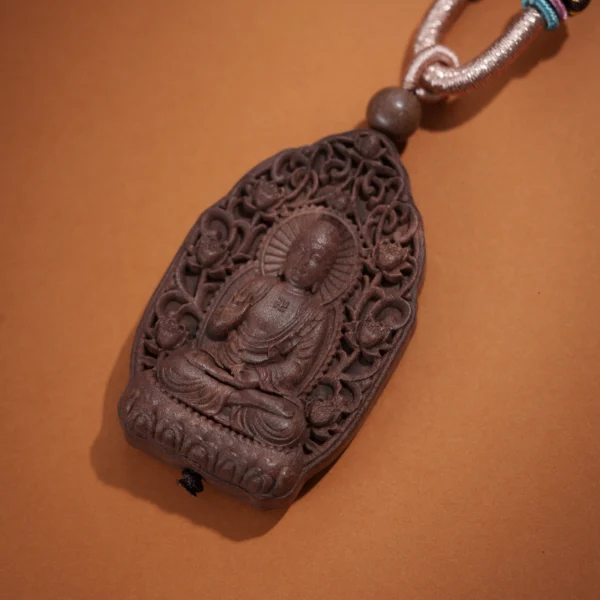
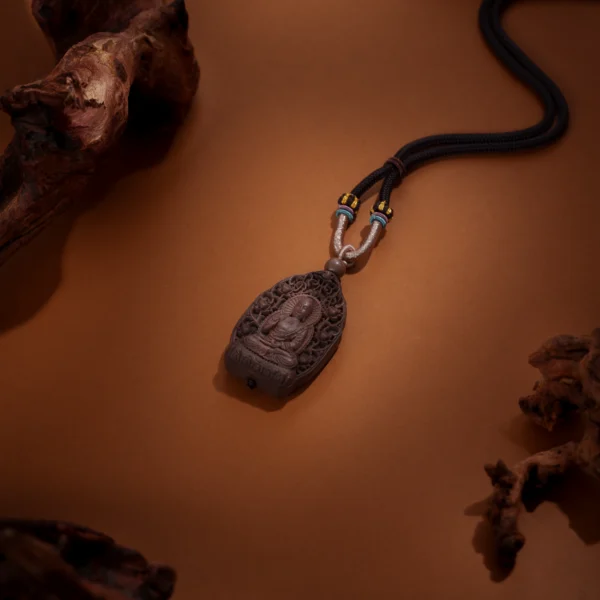
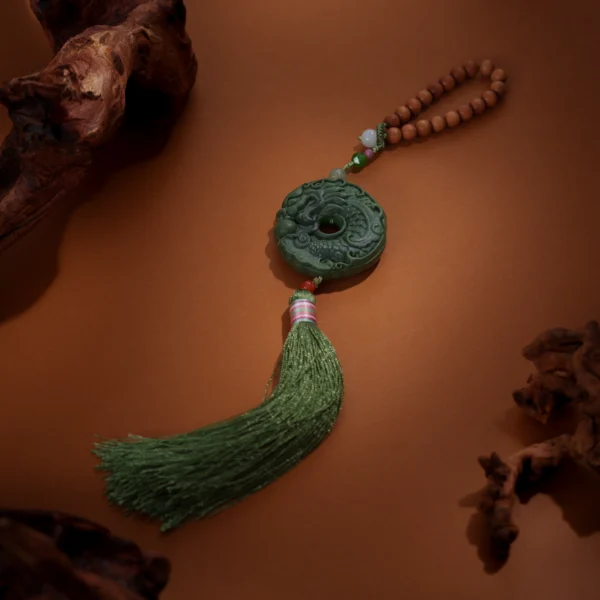
This Pendant is rooted in the ancient Song Dynasty ‘s philosophy of aromatherapy, blending the woody essence of agarwood , sandalwood and other herbs. The front features a finely carved relief of Manjushri wielding the Wisdom Sword, symbolizing the severance of ignorance and the awakening of supreme wisdom; the reverse is adorned with a Dharma wheel and lotus.

Manjushri Bodhisattva (Mañjuśrī), meaning “Wonderful Auspiciousness,” is the “Great Wisdom” Bodhisattva representing supreme Prajna wisdom in Buddhism. Legend says that at his birth, ten great auspicious signs appeared, including heavenly nectar raining down and lotuses blooming in the courtyard. He is often depicted wielding the Wisdom Sword and riding a Blue Lion, using the fearless “Lion’s Roar” to subdue delusion.He is also honored as the “Teacher of the Seven Buddhas” and the “Mother of All Buddhas,” having guided numerous Buddhas—including Shakyamuni—in past eons.
From the design prospective, the front relief depicts Manjushri wields Wisdom Sword with the right hand, symbolizes using sharp Prajna wisdom to cut through all ignorance, afflictions, and inner attachments. (As referenced in the Mahāratnakūṭa Sūtra, where Manjushri raises his sword to approach the Buddha to break sentient beings’ attachment to sin).
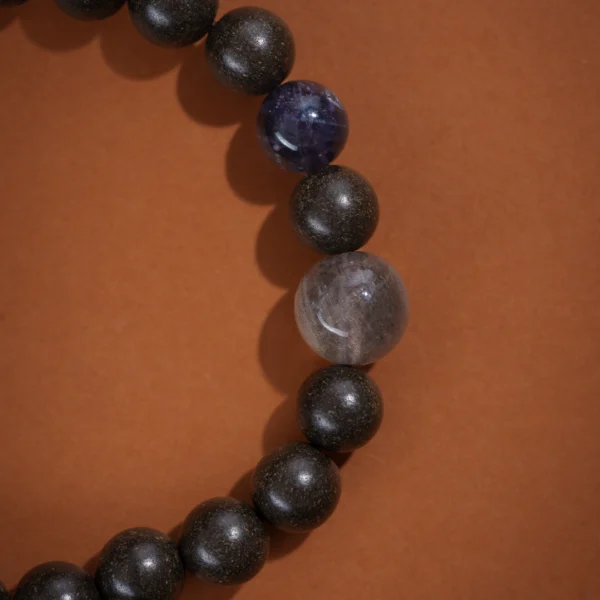
The reverse features a Dharma wheel surrounded by lotus —the wheel symbolizes the turning of Dharma and the light of wisdom, while the lotus represents a pure mind unstained by worldly troubles. The hanging cord is tied with a traditional flat knot and a blended incense bead, fully embodying the aesthetics of buddhism and culture of incense.
The “Qingmiaoxiang” (Clear and Subtle Incense) was first documented in the Song Dynasty’s “Chen’s Incense Manual”. During the mid-Northern Song Dynasty, literati gatherings flourished, with “instruments, chess, calligraphy, painting, poetry, wine, tea, and incense” being central to these events. To meet the demand for an incense that was “elegantly subtle without overpowering, and ethereally inspiring for poetic moods” during these gatherings, a pioneer of literati incense culture, created the “Qingmiaoxiang.”
The ancients believed that incense should not be too strong, as it would disrupt the appreciation of music and scholarly pursuits. Therefore, Qing miao xiang uses agarwood and sandalwood as its base, accented with borneol and musk, creating a fragrance that is “clear but not bland, wonderfully elegant but not gaudy.”
The agarwood and sandalwood provide a rich, mellow woody base; the borneol adds a crisp, refreshing coolness; and the musk imparts a lively, penetrating quality to the aroma. White honey (refined honey) is used as a natural binder, along with a trace amount of natural saltpeter to brighten the scent. Its unique craftsmanship lies in the “double-boiler honey heating” method (gently heating the refined honey in a bain-marie to make the sweetness milder and avoid the cloyingness of raw honey).
After blending the incense, it must be sealed in ceramic ware for “cellaring” for one month, allowing the various aromatic properties to fully meld. When burned or worn, the incense emits a clear, moist, and ethereal fragrance with a sweet, lingering finish.
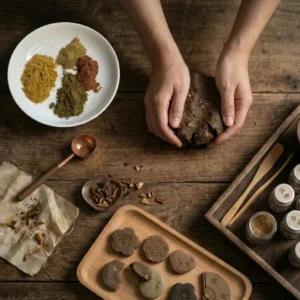 (Making Blended Incense)
| Incense Type | Qing miao xiang (Clear and Subtle Incense) |
|---|


Reviews
There are no reviews yet.